How Revised Building Plans, Colourful Brochures, and False Leasing Promises Are Destroying Investor Rights in India
For thousands of middle-class and upper-middle-class investors in India, commercial real estate was sold as the “smartest investment of the decade.”/p>
Developers promised:
- assured rentals,
- premium tenants,
- international-grade infrastructure,
- appreciation in property value,
- passive income,
- retirement security,
- and “future-ready” commercial ecosystems.
The brochures looked magnificent.
Glass towers.
Luxury lobbies.
International brands.
Co-working giants.
Global leasing partners.
Premium business parks.
“Guaranteed returns.”
“Assured occupancy.”
“High rental yield.”
Brokers, leasing agents, and developers together created a dream.
But for many investors, especially in large commercial projects across India, that dream slowly transformed into confusion, silence, delay, financial stress, and eventually — a legal battle.
The most dangerous part?
Most owners still do not fully understand how they are being financially and legally prejudiced.
THE HIDDEN GAME: ORIGINAL PLAN VS REVISED PLAN
The biggest issue in many commercial real estate disputes today is not merely delay.
It is the silent transformation of the project itself.
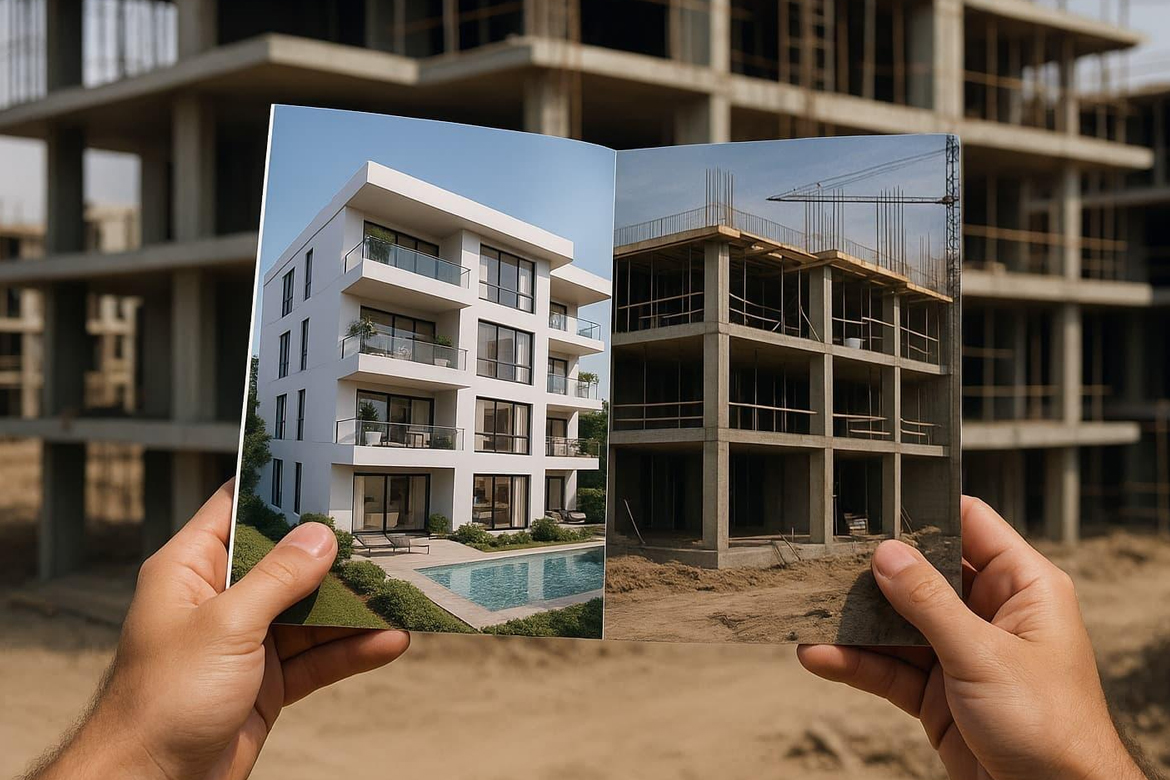
What investors purchased originally is often not what ultimately gets constructed or operated.
This happens through:
- revised building permissions,
- altered layouts,
- increased density,
- additional floors,
- changed configurations,
- reduced amenities,
- modified parking structures,
- altered common areas,
- and hidden reallocations of commercial space.
The buyer who invested based on one project unknowingly becomes part of another project.
And by the time the owners realize the difference, years have already passed.
THE SALES PITCH THAT ATTRACTED INVESTORS
Commercial real estate in India is rarely sold through technical drawings or legal disclosures.
It is sold through emotion.
The investor is shown:
- glossy brochures,
- 3D renders,
- animated walkthroughs,
- rental projections,
- leasing forecasts,
- future metro connectivity,
- celebrity launches,
- premium branding,
- and exaggerated ROI calculations.
The marketing language is carefully designed.
“Assured lease support.”
“Premium tenant ecosystem.”
“Institutional-grade investment.”
“Limited inventory.”
“High appreciation corridor.”
“Next IT destination.”
Many investors invest life savings, retirement funds, or bank loans based on these representations.
But after collection of massive funds from hundreds or thousands of purchasers, reality often changes.
THE REALITY AFTER COLLECTION OF MONEY
Once the project reaches substantial sales, many owners begin noticing disturbing developments:
- possession delays,
- no tenants,
- no rental income,
- shifting commitments,
- changing timelines,
- poor communication,
- revised building approvals,
- reduced transparency,
- and new commercial strategies never disclosed initially.
In several projects, developers continue changing the structure of the project itself after sales.
The original “premium low-density business ecosystem” slowly becomes a congested commercial structure overloaded with additional units and altered layouts.
The result is devastating.
HOW REVISED BUILDING PLANS AFFECT OWNERS
Most ordinary owners do not understand the technical consequences of revised plans.
But the impact is enormous.
1. DILUTION OF OWNERSHIP VALUE
When additional units or floors are added:
- common areas become crowded,
- lifts become overloaded,
- parking becomes insufficient,
- operational efficiency reduces,
- tenant experience deteriorates.
2. REDUCTION OF RENTAL POTENTIAL
Corporate tenants prefer:
- efficient circulation,
- exclusivity,
- proper parking,
- low-density occupancy,
- professional infrastructure.
Corporate tenants prefer:
When project density increases beyond original expectations, leasing attractiveness decreases.
Ironically, the same leasing agents who once promised premium tenants often disappear after sales are completed.
3. FALL IN RESALE VALUE
Distress sales begin.
- Owners try selling within WhatsApp groups.
- Investors lose confidence.
- Market perception declines.
- Liquidity collapses.
The commercial unit that was sold as a “future wealth asset” becomes financially trapped inventory.
4. DELAY WITHOUT ACCOUNTABILITY
The developer continues giving verbal assurances.
- “Next quarter.”
- “Tenant discussions are underway.”
- “Fit-outs are progressing.”
- “Leasing is under advanced stage.”
Meanwhile:
- EMIs continue,
- interest accumulates,
- maintenance starts,
- rental expectations fail,
- and years pass without meaningful returns.
THE LEGAL RIGHTS MOST OWNERS DO NOT KNOW
Under Real Estate (Regulation and Development) Act, 2016
A developer cannot materially alter sanctioned plans without consent of at least two-thirds of the allottees.
This protection exists because once units are sold, the builder no longer has absolute ownership over the project.
The owners acquire legal and financial rights in:
- the project structure,
- common areas,
- amenities,
- access,
- circulation,
- and overall project character.
Yet many developers behave as though purchasers are merely “customers” with no participation rights.
That is legally incorrect.
THE ROLE OF BROKERS AND LEASING AGENTS
In many commercial projects, the brokers and leasing agents become the most aggressive marketing machinery.
They promise:
- immediate tenants,
- multinational companies,
- guaranteed lease support,
- rental appreciation,
- assured occupancy.
But in reality:
- many assurances remain oral,
- marketing claims are carefully unrecorded,
- projections are exaggerated,
- and accountability disappears after booking.
THE MOST DANGEROUS PART: OWNERS REMAIN DIVIDED
Developers often benefit from one important factor:
Owners do not act collectively.
Thousands of investors suffer individually:
- one person struggles with EMI,
- another waits for tenants,
- another attempts resale,
- another fears litigation costs.
But the developer deals with them separately.
This imbalance allows prolonged delay and unilateral decision-making.
The moment owners organize collectively through associations or ad-hoc committees, the power equation changes dramatically.
WHAT EVERY COMMERCIAL PROPERTY OWNER SHOULD IMMEDIATELY VERIFY
Ask for:
- Original sanctioned plan<
- Revised sanctioned plan
- RERA disclosures
- FAR/FSI calculations
- Parking allocation
- Common area calculations
- Occupancy approvals
- Leasing agreements
- Tenant pipeline disclosures
- Structural revisions
- Timeline commitments
Most owners are shocked when they finally compare the original project representations with the revised approvals and actual site condition.
THIS IS NOT JUST A DELAY ISSUE — IT IS AN INVESTOR RIGHTS ISSUE
Across India, commercial real estate investors are increasingly realizing:
they were not merely buying office space —
they were buying a promised future.
And when that future is altered without transparency, consent, or accountability, the issue becomes far more serious than construction delay.
It becomes a question of:
- investor protection,
- contractual fairness,
- statutory compliance,
- transparency,
- and ethical governance in real estate.
THE BIG QUESTION EVERY OWNER MUST ASK
“Did we receive the same project that was sold to us?”
If the answer is uncertain, every owner should immediately seek:
- technical comparison,
- legal review,
- collective organization,
- and statutory remedies.
Because by the time the revised reality becomes fully visible, the financial damage may already be substantial.
FINAL WORD
India’s commercial real estate sector cannot survive on brochures, verbal assurances, and marketing hype alone.
The future of real estate depends upon:
- transparency,
- accountability,
- investor participation,
- and strict enforcement of owner rights.
The law today increasingly recognizes that apartment and commercial unit purchasers are not passive spectators.
They are stakeholders.
And once hundreds or thousands of investors collectively recognize their rights, even the largest developers are forced to answer difficult questions.