
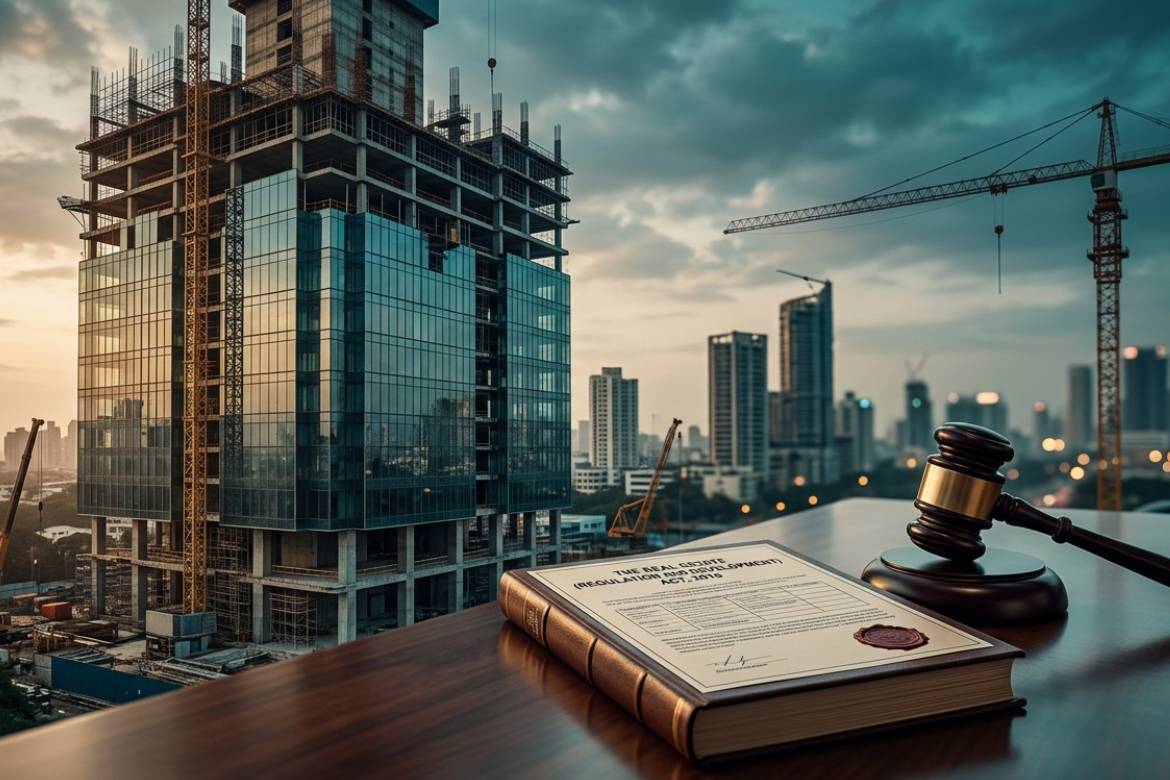
Commercial real estate is sold with glossy brochures, rental projections, tenant stories, and the sweet smell of future returns. But when the promised commercial unit remains non-operational for years, rentals never arrive, extra charges suddenly appear, and investors are asked to quietly sign one-sided documents, the brochure starts looking less like a promise and more like expensive fiction.
That is where the Real Estate (Regulation and Development) Act, 2016 steps in. RERA was enacted to regulate and promote the real estate sector, ensure transparent sale of real estate projects, and protect consumer interests (India Code). In simple words: the law does not allow a promoter to sell a dream, collect the money, delay the project, hide the accounts, and then behave as if the allottee is asking for charity.
Delay Is Not Just Delay. It Is a Legal Alarm Bell.
In commercial projects, delay hurts twice. First, the allottee’s capital is blocked. Second, the expected rental income never begins. That means the investor is not merely waiting for four walls, a ceiling, and a key. The investor is waiting for the very business purpose of the purchase to come alive.
Under RERA, promoter duties are not casual promises written in disappearing ink. Section 11 deals with the functions and duties of the promoter, including obligations connected with project information and completion, while Section 18 addresses return of amount and compensation where the promoter fails to complete or give possession in accordance with the agreement (India Code). Therefore, when a project remains delayed for years, the allottee’s grievance is not emotional noise. It is a statutory claim wearing a very patient face.
And patience, in law, is not permanent waiver. It is often evidence of reasonableness before action.
No Rentals, No Transparency, No Answers: The Perfect RERA Storm
Commercial projects are often marketed on the promise of leasing support, assured footfall, rental generation, and long-term income. But if years pass without tenant onboarding, without operationalization, and without clear written updates, the allottee is entitled to ask hard questions.
Where did the money go? What is the stage of construction? What approvals are pending? Who is handling leasing? What is the financial capacity to complete the project? Why are allottees being kept outside the room when decisions about their own units are being made?
These are not “irritating customer queries.” These are legitimate legal questions. Telangana RERA’s official public information also recognises the regulatory framework around project registration, promoter responsibilities, allottee remedies, and penalties for violations (Telangana RERA). A promoter cannot treat transparency like optional furniture, to be installed only if convenient.
The “Warm Shell” Surprise: When Extra Charges Enter Through the Back Door
One of the most common pressure tactics in delayed commercial projects is the sudden appearance of additional costs. They may be called “warm shell charges,” “fit-out charges,” “operational charges,” “leasing facilitation charges,” or some other polished phrase that sounds less alarming than “pay more or stay stuck.”
If a charge was not part of the agreed contractual framework, it cannot be imposed merely because the promoter has discovered a new line item after collecting substantial consideration. Section 13 of RERA regulates agreements for sale and protects the contractual framework between promoter and allottee, while Section 14 addresses adherence to sanctioned plans and project specifications (India Code). In plain English: the goalpost cannot be shifted after the match has started.
The law does not reward creative billing. Especially when the creativity appears only after the allottee’s money is already locked in.
UDS Is Not a Decorative Footnote
Undivided Share of Land, commonly called UDS, is not a minor technical detail that can be reduced, adjusted, or reallocated casually. It is a valuable proprietary interest connected with the immovable property purchased by the allottee.
If the allottee was promised or conveyed a certain UDS, any attempt to reduce or alter it without proper consent raises serious property law and RERA concerns. A developer may sell carpet area, super built-up dreams, glass elevations, and lifestyle vocabulary. But land rights are not marketing material. They are legal rights.
When UDS is touched without consent, the issue is no longer only “delay.” It becomes a title and ownership concern. That is where the legal temperature rises quickly.
The Mystery Middleman Problem: Who Is Charging What, and Why?
In many commercial projects, a third-party entity suddenly appears as a leasing partner, management agency, intermediary, or “facilitator.” Sometimes this entity demands brokerage, interest, service fees, or other charges. The allottee is then expected to accept the arrangement as if it descended from the heavens with automatic legal authority.
That is not how law works. If any third party is claiming authority over leasing, management, brokerage, interest, or collection of charges, the allottee is entitled to demand disclosure of its legal identity, contractual relationship with the promoter, scope of authority, and basis for charges.
If the promoter introduced the third party, the promoter cannot conveniently vanish behind it. Delegation is not disappearance. An agent cannot become a legal washing machine for responsibility.
CAM Charges and the Magic “Factor”
Common Area Maintenance charges must be transparent, justifiable, and contractually supported. If a promoter or management agency applies a mysterious formula, factor, multiplier, or ratio without explanation, allottees are entitled to challenge it.
Maintenance cannot become a mathematical magic show. If a “0.7 factor” or any other formula is being used, the allottee can demand the basis, the computation sheet, the contractual clause, and the supporting documents.
In commercial real estate, numbers matter. If the formula cannot be explained, it should not be billed.
RERA Gives Teeth, Not Merely Advice
RERA is not a polite suggestion box. An allottee can approach the authority for complaints and appropriate reliefs, and Section 31 provides for filing complaints before the Authority or adjudicating officer, while Section 37 empowers the Authority to issue directions from time to time (India Code). In serious cases involving continued default, lack of transparency, misleading representations, or statutory non-compliance, the statute also contains penalty provisions under Sections 59, 60, and 61 (India Code).
The Supreme Court has also recognised that remedies under RERA can operate alongside other remedies available to allottees, and the decision in Imperia Structures Ltd. v. Anil Patni, (2020) 10 SCC 783, is frequently relied upon for this principle (Supreme Court of India). That matters because a promoter cannot simply say, “Go somewhere else, not here.” In many cases, the law allows the allottee to choose the sharper tool.
What Allottees Should Demand Before Things Get Worse
Before approaching the authority, allottees should usually build a clean paper trail. A strong legal notice or representation should demand the following:
- Project status: current construction stage, completion timeline, occupancy status, and pending approvals
- Financial transparency:funds collected, funds utilised, separate account compliance, audit reports, and utilisation certificates.
- Leasing clarity:tenant negotiations, leasing agency details, proposed revenue model, brokerage, and management terms.
- Charge justification:legal basis for warm shell charges, CAM charges, brokerage, interest, and any additional demand.
- UDS confirmation: written confirmation that UDS and ownership-linked rights will not be reduced or altered without consent.
- Allottee participation: formation or recognition of the association of allottees and participation in leasing and maintenance decisions.
- Remedial roadmap: a binding completion and operationalization plan, not another “soon” wrapped in corporate perfume.
The word “soon” has done enough damage in real estate. It is time to replace it with dates, documents, and accountability.
The Bottom Line
If a commercial project is delayed, non-operational, non-transparent, and burdened with unilateral charges, allottees should not treat it as bad luck. They should treat it as a legal problem requiring structured action.
RERA was not enacted so that buyers could admire a statute while waiting endlessly for possession, rentals, disclosures, and basic fairness. It was enacted to correct an industry imbalance. When promoters forget that, a well-drafted notice, a collective allottee strategy, and a properly framed RERA complaint can bring the conversation back from “please cooperate” to “now comply.”
Because in real estate, the most expensive property is not always land. Sometimes it is silence.
Need Legal Assistance?
Master Key Attorneys assists allottees, investors, associations, and property buyers in RERA notices, complaints, delay compensation claims, refund claims, illegal charge disputes, UDS issues, and promoter accountability actions.
If your investment is stuck, your rentals have not started, or your developer is asking you to sign first and understand later, speak to a legal professional before signing anything further.
Disclaimer: This article is for general legal awareness and does not constitute legal advice. Specific legal strategy should be based on the documents, facts, project registration details, correspondence, and applicable state RERA rules.